Pricing & Product · ANALYTICS
Raise margin without losing volume via elasticity tests
+9%
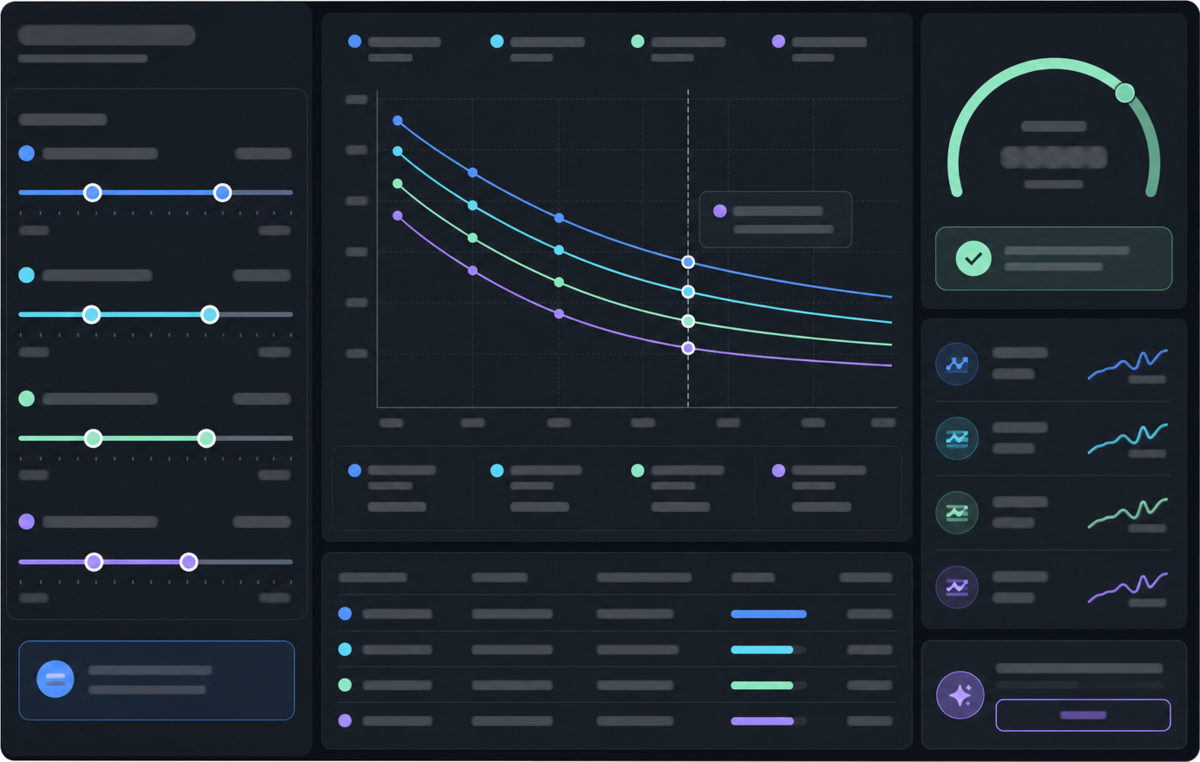
Most price decisions are made once and then defended forever. This engagement measures how demand actually responds to price on your own SKUs, and puts a competitor guardrail around the answer.
The process
Assemble the price history
Order lines, list price, discount and promotion flags pulled into the warehouse, joined to unit cost so margin is visible at the transaction level.
Clean the confounders
Campaign weeks, stock-outs and channel mix separated out, so a price move is not credited with a demand shift it did not cause.
Estimate elasticity per band
Demand curves fitted per SKU cluster rather than per product, because a single item rarely carries enough observations to be trusted.
Run price-band experiments
A short list of candidate prices tested on live traffic, one band at a time, with a competitor price scraper running as the guardrail.
Read margin, not volume
Each band is judged on contribution margin after fees and returns; the winning price ships with the floor and ceiling written down.
What we need from you
- Twelve months of order lines with unit cost
- The list of SKUs in scope and their competitor set
- Authority to change prices for the test window
What you get
- Elasticity estimates by SKU cluster
- Tested price bands with margin outcomes
- A pricing floor and ceiling per cluster, with a competitor-move playbook
Timeline
Four to six weeks, test window included.