Trends ·
Thailand ecommerce is a system, not a platform choice
Trade.gov and Thailand's PRD point to three connected entry constraints: a mobile-led transaction path, cross-border competition, and a changed 2026 import-tax rule for foreign online goods.
Thailand entry planning runs into three independently evidenced constraints: a mobile-led transaction path, meaningful cross-border activity, and a changed import-tax treatment for foreign online goods. Platform choice sits inside that system rather than above it, and no amount of it substitutes for a plan covering payment, delivery, returns and compliance.
Mobile is the transaction environment
Trade.gov names Shopee, Lazada and TikTok among Thailand's major ecommerce platforms and reports that mobile devices account for more than 80% of total online sales. The same guide carries separate ETDA measures: 74% of ecommerce transactions, and 65% of transactions through applications. These are related but distinct measures, and a plan that collapses them into a single claim about platform market share has already lost the thread.
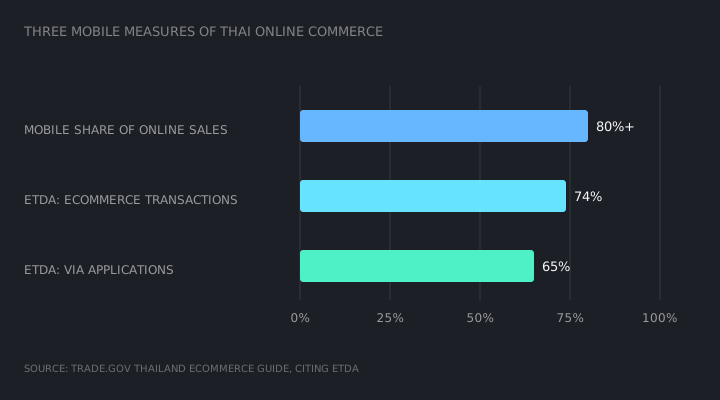
For a merchant, the implication is operational rather than strategic. Product discovery, payment options, shipping promises, returns and customer service all have to work on a small-screen purchase path. A marketplace supplies an entry point into that path; it does not remove the need to measure successful payment, delivery performance and post-purchase service.
Cross-border rules changed on 1 January 2026
Trade.gov identifies cross-border purchasing, and competitive pressure from Chinese sellers, as material features of the market. Separately, Thailand's Public Relations Department announced that from 1 January 2026 import duty and VAT apply to foreign goods sold online from THB 1 upward, ending the former exemption for goods below THB 1,500. The date boundary is the part to hold on to: descriptions of the earlier threshold cannot be used to model a 2026 order.
The guide also covers the Digital Platform Decree, including local-contact requirements for overseas platform operators serving Thai consumers. That is an obligation on platform operators, not general legal advice for every foreign merchant. Merchant-specific tax, import, consumer-protection and data obligations still need local professional advice.
Model landed cost before committing a platform budget
The relevant unit is not the advertised price. It is landed cost after import duty, VAT, platform commission, advertising, vouchers, payment, fulfilment, returns and service. Build that model by SKU and shipping route, then test whether the mobile purchase path can actually deliver the promised price and service level. A regional GMV estimate may describe market concentration well enough, but it cannot answer a merchant-level question of this kind.
Record which source supports which element of the model. Trade.gov establishes the mobile and market context; the PRD notice establishes the change to the import-tax threshold. Neither stands in for an actual product classification, tax calculation or seller agreement.
So what
Build the Thailand plan from the mobile order path and the post-2026 landed-cost model, then give each platform a role inside it. A platform that creates discovery but cannot carry paid conversion, delivery, returns and contribution margin belongs in the test column, not on a scaled budget line.
Sources
- trade.gov/country-commercial-guides/thailand-ecommerce
- thailand.prd.go.th/en/content/category/detail/id/2078/iid/440097
- thelowdown.momentum.asia/new-report-southeast-asias-platform-ecommerce-reaches-us157-6b-in-2025-with-top-platforms-expanding-share-to-98-8
- tmogroup.asia/insights/top-online-marketplaces-thailand
- euromonitor.com/retail-e-commerce-in-thailand/report