品类 ·
Home goods are growing in specialist channels
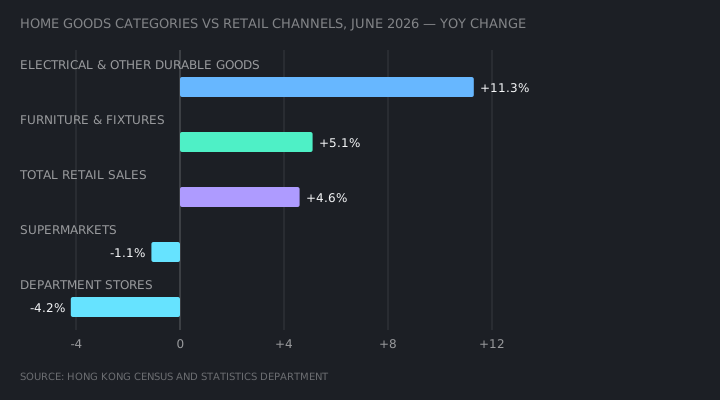
Furniture rose 5.1% and electrical goods 11.3% in June 2026, the same month department stores fell 4.2%. That channel split should shape where a home goods retailer sells.
英文原文 — 本篇文章的中文版本尚未发布。
The Census and Statistics Department's June 2026 retail sales release reports furniture and fixtures up 5.1% year on year, and electrical goods and other durable goods up 11.3%. Both sit comfortably ahead of total retail sales growth for the month, which was 4.6%. In the same release, department stores — a general-merchandise format that in Hong Kong has historically carried home goods and durables alongside apparel, cosmetics and other categories — fell 4.2%.
Two category lines that would sit on a home goods retailer's shelf are outgrowing the market, while a channel format that has historically sold some of those same goods is shrinking. There is a channel story sitting inside the category growth story, and it is the more actionable of the two.
Reading category growth and channel decline together
Census and Statistics Department retail categories are defined by what is sold; department stores are defined by the format of the outlet. Those are different axes, so a category can grow while a channel that partly carries it shrinks — which is what this month's release shows. It would be overreach to conclude that home goods demand is weak inside department stores specifically, because the release does not break sales out by channel within a category, and asserting that split would mean inventing a number this brief does not have.
The defensible read is narrower. General merchandise as a store format is losing share of retail spending overall, while the specific categories that make up home goods are gaining it. That combination is consistent with a shift toward specialist and category-focused retail — dedicated furniture stores, appliance and electronics retailers, home goods specialists — at the expense of the department store format that used to aggregate several categories under one roof.
Electrical goods and other durable goods at 11.3% is the standout figure in the release: more than double total retail growth, and well ahead of furniture and fixtures. A retailer selling across both furniture and electrical or appliance lines should stop treating them as one category moving together. One is growing at roughly the market rate; the other is well ahead of it.
A third channel figure is worth holding alongside the first two. Supermarkets, which in Hong Kong carry a limited range of small household goods alongside groceries, fell 1.1% in the same release. That is a far smaller decline than department stores, but it points the same way: general, grocery-anchored and general-merchandise formats losing ground while purpose-built category retailers gain it. None of these three channel figures were collected to describe home goods distribution, so none should be read as a precise measurement of it. Read together, they are three independent data points moving in one direction, which is more reliable than any one of them alone.
What this means for a quarter of decisions
If you are choosing between them, weight new floor space or online catalogue investment toward electrical and durable goods over furniture. The growth differential this month — 11.3% against 5.1% — is wide enough to matter for where incremental spend goes, even allowing for month-to-month volatility in a single release.
If your home goods business sells through department store concessions, model that channel's trajectory separately from the category trend. Reading "furniture and fixtures up 5.1%" as validation for a concession strategy applies a category number to a channel that fell 4.2% in the same release. The category figure describes total market sales across all channels, not how the department store channel is performing within that category, and at the aggregate level the two are moving in different directions.
Then treat this as one month of data and check the trend before committing capital. A single release establishes nothing durable on its own. Pull the preceding several months of the same series — the Census and Statistics Department publishes it monthly — to see whether furniture and electrical goods have consistently run ahead of total retail, or whether June 2026 is an outlier driven by a promotional period or a low base in the year-earlier month.
So what
The decision this data supports is not "home goods is a growth category, expand." It is narrower and more useful. Within home goods, electrical and durable goods is currently outgrowing furniture and fixtures by a wide margin, and general-merchandise formats are shrinking while the categories they used to carry grow. For anyone deciding where to place inventory or open new points of sale this quarter, that argues for specialist and category-focused distribution over concession or department-store models.